virtual reality simulation for manipulationg working objectification psychology social psychology

ACME VR. Work-Related Objectification

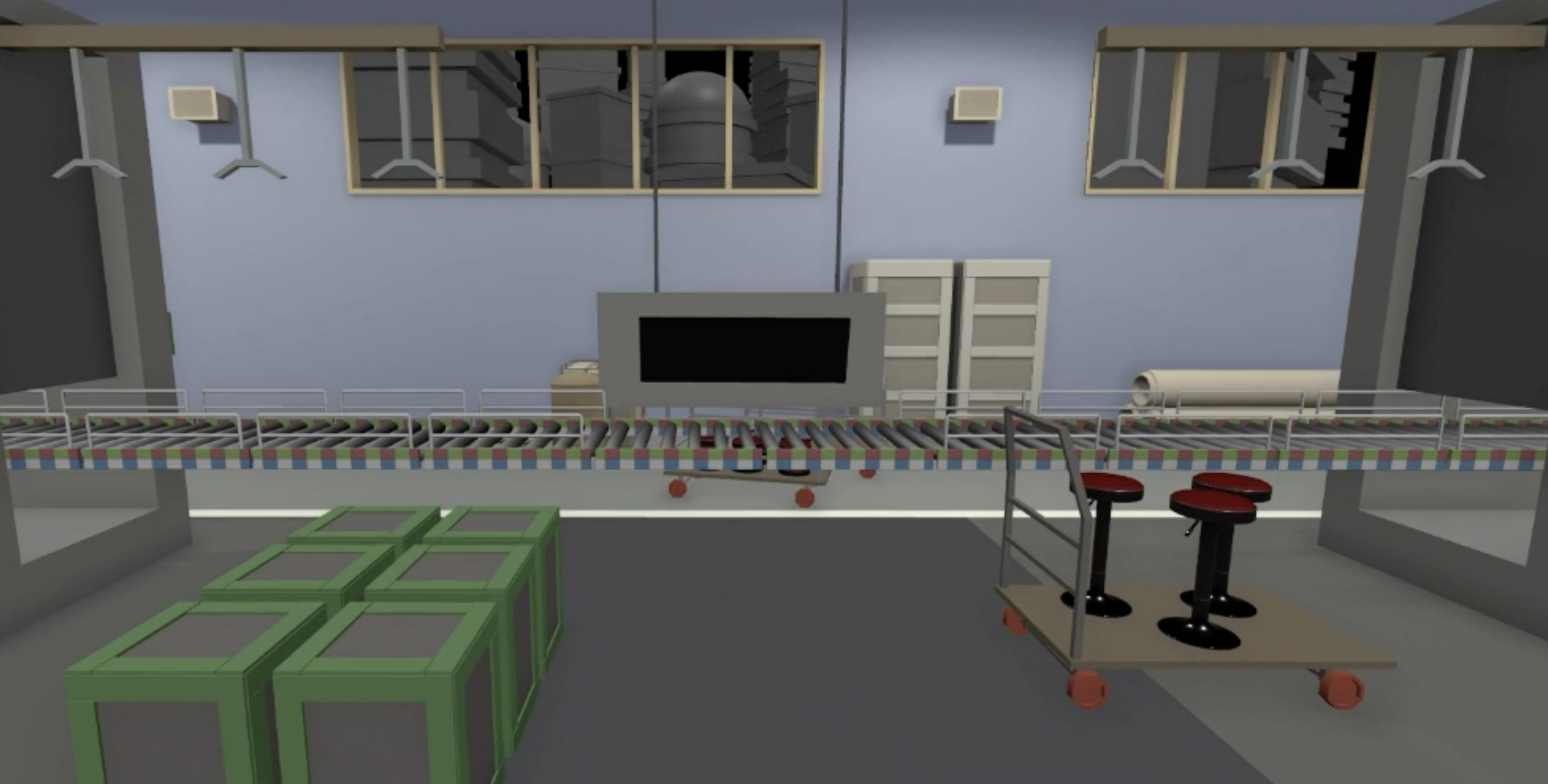
ACME-VR is an immersive virtual reality paradigm designed to experimentally investigate work-related objectification and its psychological consequences. The environment was developed to reproduce key characteristics of different forms of work while combining the ecological validity of an immersive workplace simulation with the experimental control required for psychological research. The paradigm includes two distinct working conditions: an objectifying assembly-line environment and a non-objectifying craft-based environment.

In the objectifying condition, participants work on a virtual factory assembly line and repeatedly assemble the same components under strict time constraints. The task is specifically designed around three characteristics associated with objectifying work: repetitiveness, fragmentation, and external control. In the non-objectifying condition, participants work in a virtual woodworking workshop, where they build an entire chair by freely selecting and combining different components. This condition emphasizes autonomy, task variety, creativity, and holistic engagement rather than externally imposed and fragmented work.

ACME-VR is not only an experimental environment but an empirically validated research paradigm. Its development and validation have been published in Acta Psychologica. Across a preliminary validation study and a preregistered main study, the assembly-line condition produced significantly greater self-objectification than the woodworking condition. Participants exposed to the objectifying environment perceived themselves as more instrument-like and attributed fewer human mental states to themselves. Importantly, factors specific to the VR experience, including presence and embodiment, were comparable across conditions, supporting the interpretation that the observed psychological differences were primarily driven by the characteristics of the work activity itself.

The paradigm therefore provides a validated and flexible experimental platform for studying how work design shapes workers’ self-perception and psychological experience, while also offering a foundation for investigating additional outcomes associated with repetitive, fragmented, and externally controlled work.

Scientific publication
Puzella, G., Sterlicchio, A., Baldissarri, C., Manfredi, A., Greitemeyer, T., & Gabbiadini, A. (2025). A virtual reality environment to study work-related objectification. Acta Psychologica, 255, 104902. https://doi.org/10.1016/j.actpsy.2025.104902

Per il sito del Cyberpsychology Lab, questa secondo me è una lunghezza buona: spiega concretamente cosa fa l’esperienza, rende molto visibile la distinzione tra le due condizioni e, soprattutto, comunica che non si tratta semplicemente di una demo VR, ma di un paradigma sperimentale già validato e pubblicato.
web based manipulation for working objectification elicited by Artificial intelligence social psychology

STEMI – AI Recruitment Paradigm

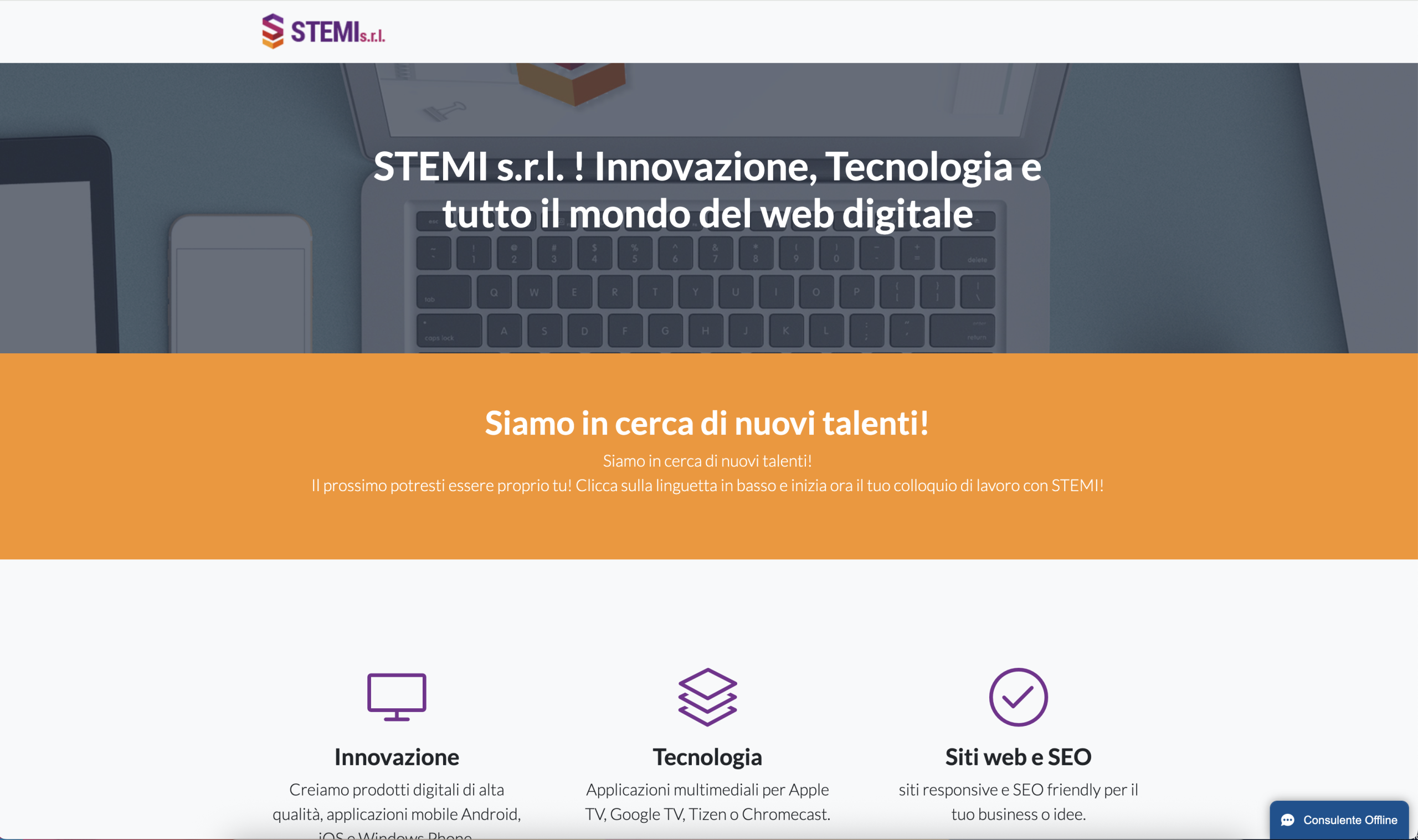
STEMI is a web-based experimental paradigm developed to investigate the psychological consequences of being evaluated by artificial intelligence in a workplace context. The paradigm simulates a realistic online recruitment process and allows researchers to manipulate whether candidates are evaluated by an AI-based recruiter or a human recruiter, providing an ecologically relevant framework for studying work self-objectification, perceived self-efficacy, agency, and beliefs in free will.

The paradigm is built around the website of a fictitious company, STEMI, where participants are asked to imagine applying for an open job position. After entering the experimental environment, participants explore the company website and encounter a recruitment banner advertising available positions. They are then invited to apply for the position and proceed to an online job interview through the website’s integrated chat system.

Depending on the experimental condition, participants are informed that their interview will be conducted either by an AI recruiter or by a human HR recruiter. In both conditions, the interview follows the same predefined structure and questions, allowing the identity of the evaluating agent to be manipulated while keeping the content of the interaction as comparable as possible. During the original implementation, both the AI system and the human operator were instructed to redirect participants to the recruitment task whenever the conversation deviated from the interview.

The interaction reproduces several key features of contemporary algorithmic recruitment. In the AI condition, participants interact with a natural-language-processing system designed to conduct candidate screening and extract relevant information from their responses. The interview therefore places participants in a situation in which their personal characteristics and experiences are transformed into information that can be analysed by an algorithm. This makes the paradigm particularly suitable for investigating datafication and work self-objectification—that is, the possibility that individuals come to perceive themselves less as autonomous human agents and more as data, instruments, or resources evaluated according to externally defined criteria.

In its original implementation, the simulated interview lasted approximately 40 minutes. At the end of the interaction, both the AI and human recruiter informed participants that the selection process had concluded and asked them to wait for the result. Participants subsequently received unsuccessful selection feedback. Psychological measures were then administered to assess outcomes including self-efficacy, self-objectification, beliefs in free will, realistic threat, and human identity threat.
The STEMI paradigm was used in Study 2 of Gabbiadini et al. (2025) as a more ecologically valid extension of earlier scenario-based experiments. The study showed that interacting with an AI recruiter, compared with a human recruiter, was associated with lower perceived self-efficacy and greater work self-objectification. The broader research suggests that AI-mediated evaluation may reduce individuals’ perceived agency by placing them in an externally controlled and highly data-driven evaluative process.

Reference

Gabbiadini, A., Durante, F., Baldissarri, C., Manfredi, A., Sterlicchio, A., & Romano, S. (2025). Artificial intelligence in the workplace: Effects on self-efficacy, self-objectification and beliefs in free will. Journal of Community & Applied Social Psychology, 35, e70107. https://doi.org/10.1002/casp.70107