Classic experimental paradigm for manipulating social inclusion and ostracism
Cyberball is a widely used experimental paradigm developed to study the psychological consequences of social exclusion and ostracism. It takes the form of a simple virtual ball-tossing game in which participants believe they are interacting online with other players, although the behavior of the other players is actually controlled by the experimental program.
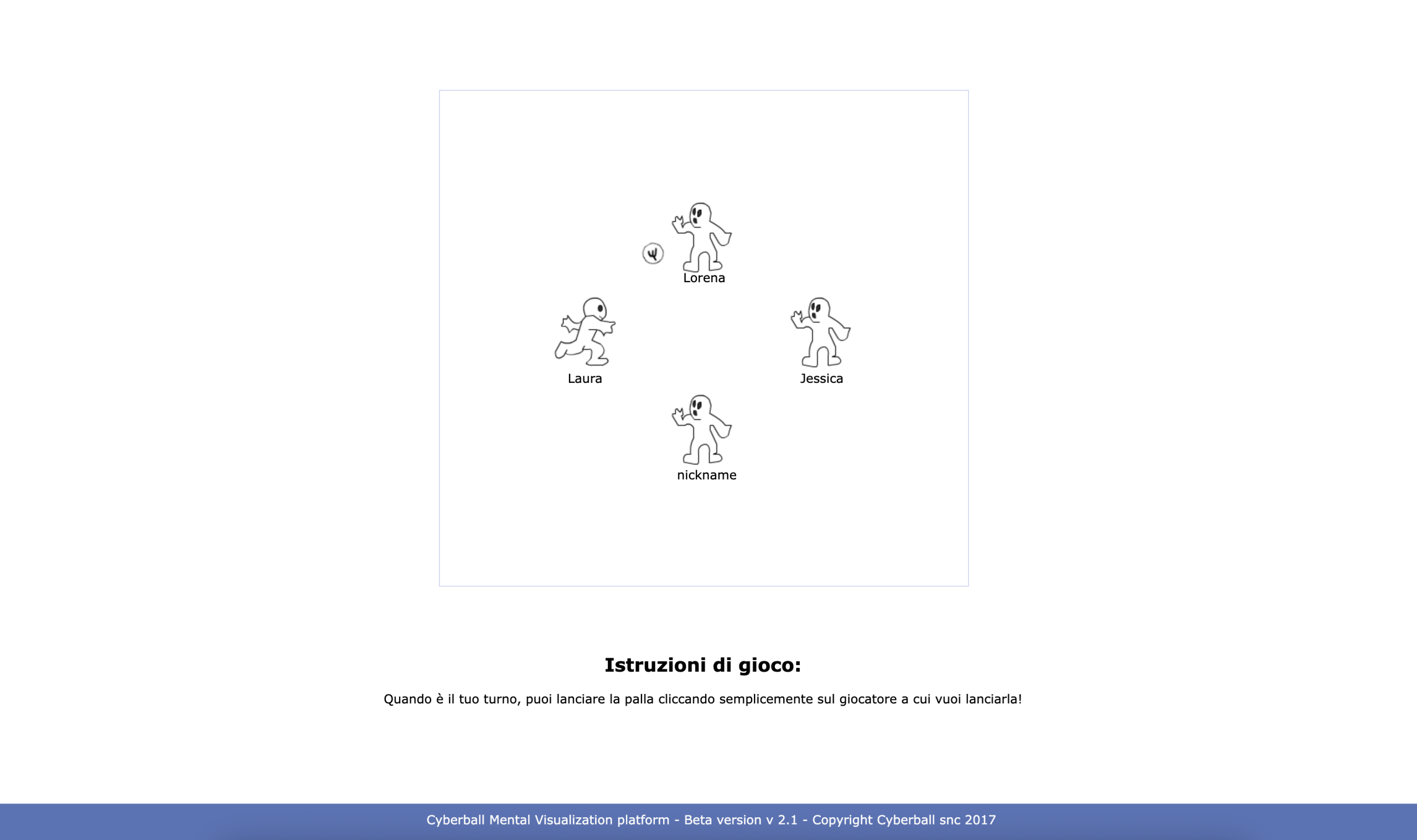
In the original paradigm, participants are typically told that the task concerns mental visualization and are asked to imagine the interaction while taking part in a virtual ball-tossing game. They play together with two or more apparent participants and can choose to whom they want to throw the ball whenever they receive it. The apparent co-players are in fact computer-controlled, allowing the experimenter to systematically manipulate the participant’s level of social inclusion.
The interaction generally involves three main phases. First, participants receive instructions introducing the virtual ball-tossing task and are led to perceive the other players as interaction partners. During an initial inclusion phase, the ball is distributed relatively evenly among the players, allowing the participant to experience normal social participation. In the ostracism or exclusion condition, the other players subsequently stop—or substantially reduce—throwing the ball to the participant and instead exchange it primarily with one another. In comparison, participants assigned to an inclusion condition continue receiving the ball throughout the game. This simple manipulation reliably produces an experience of being ignored or excluded despite the minimal and artificial nature of the interaction.
Cyberball has become one of the most established paradigms for investigating responses to social exclusion, including changes in belonging, perceived control, self-esteem, meaningful existence, affect, and subsequent social behavior. The original research showed that even exclusion occurring in a brief computer-mediated interaction can negatively affect participants’ sense of belonging and control.
Custom Italian Version
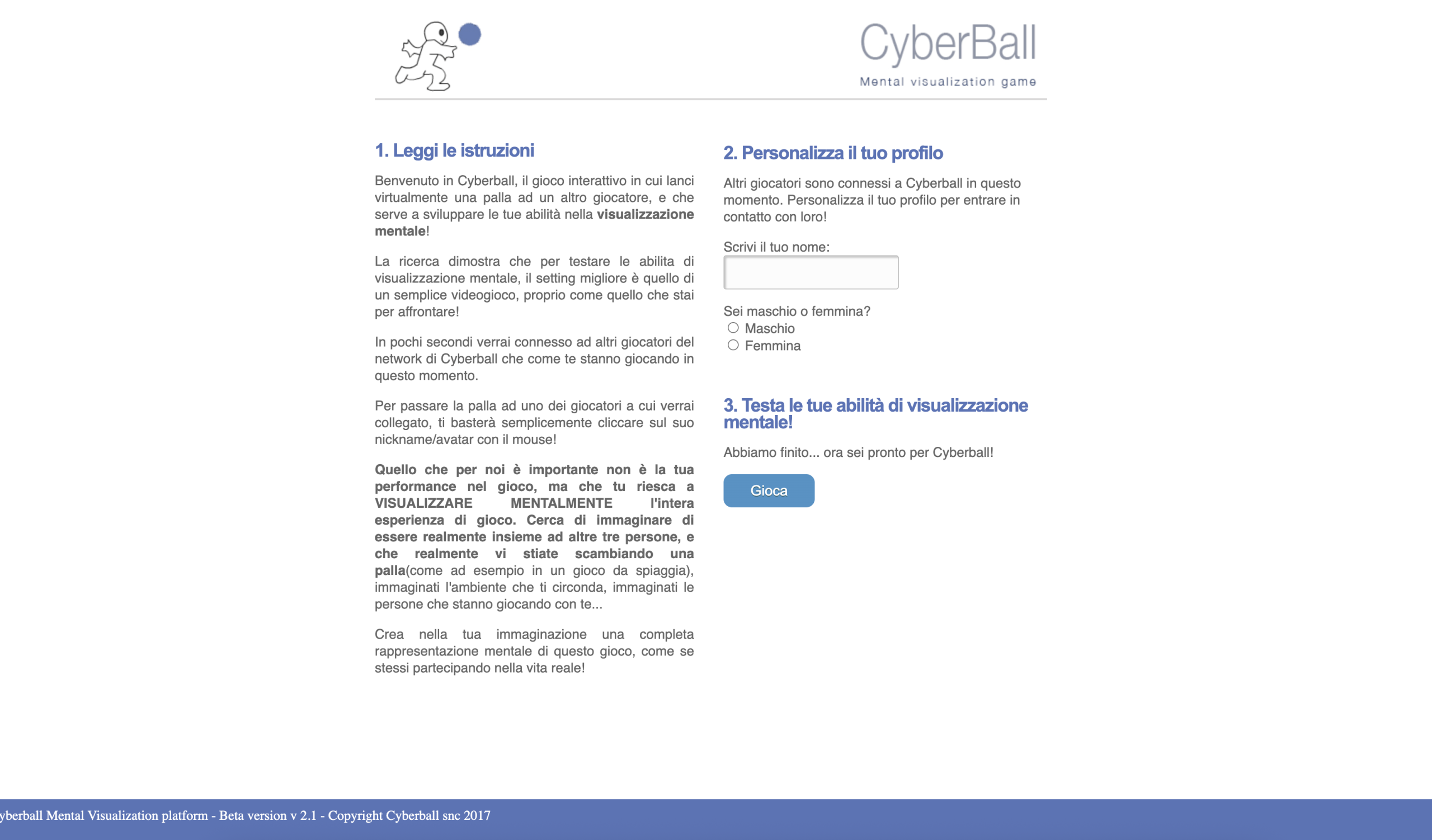
The version available here is a customized Italian implementation of the Cyberball paradigm, designed for use in experimental research. It preserves the core logic of the original social inclusion/exclusion manipulation while providing a modernized graphical interface and an improved visual presentation.
The paradigm is configurable in Italian, allowing researchers to adapt the experimental setup and interaction parameters to the requirements of their study. This version is intended to provide a more contemporary and flexible implementation of the classic Cyberball task while maintaining its central experimental mechanism for manipulating perceived social inclusion and exclusion.
Original Reference
Williams, K. D., Cheung, C. K. T., & Choi, W. (2000). Cyberostracism: Effects of being ignored over the Internet. Journal of Personality and Social Psychology, 79(5), 748–762. https://doi.org/10.1037/0022-3514.79.5.748
Gallery


 '
'