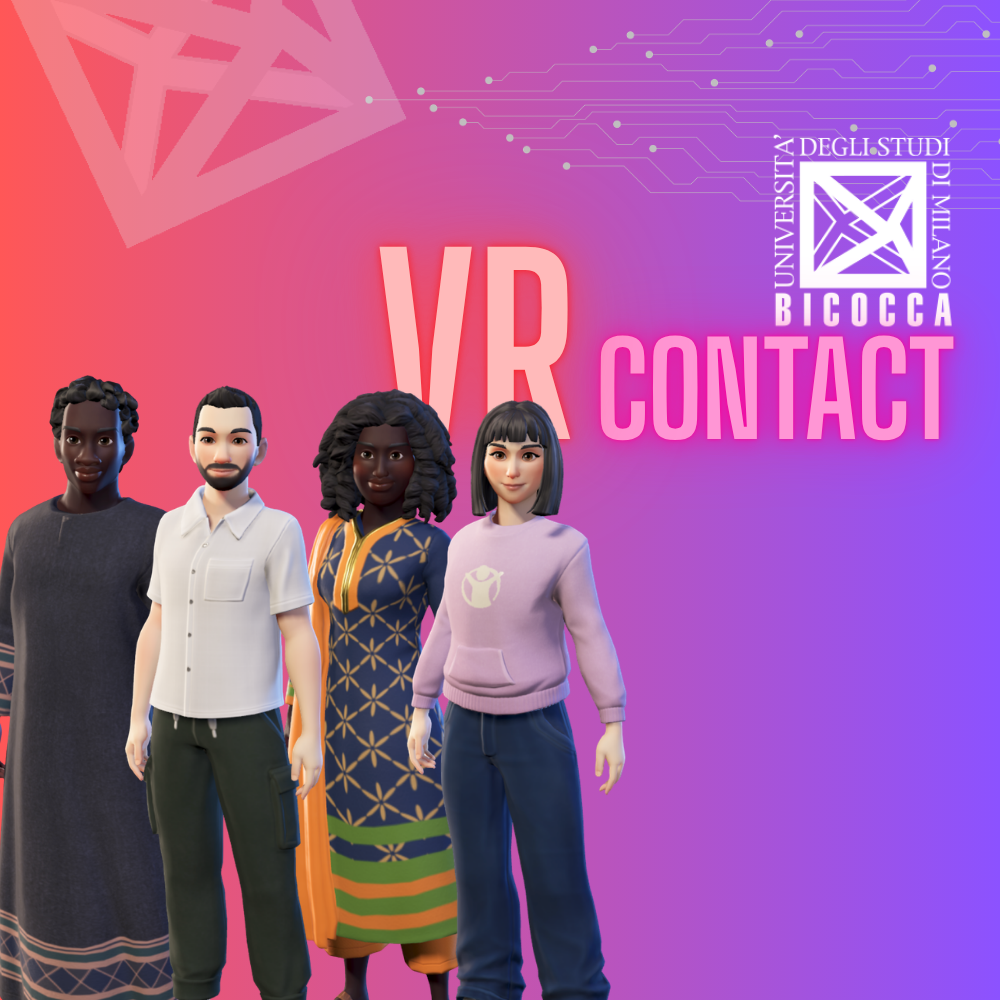
VR contact virtual reality environment for studing prejudice Allport contact hypothesis

VR Contact: Immersive Intergroup Encounters in Virtual Reality

VR Contact is a custom-built immersive virtual environment developed to study how people perceive, categorize, and interact with members of different social groups in virtual reality. The platform allows us to systematically manipulate avatars, group membership cues, embodiment, social context, and interaction dynamics while maintaining a high level of experimental control.

VR Contact is designed to investigate the psychological processes underlying social categorization, intergroup contact, prejudice, and bias reduction. By creating controlled but socially meaningful encounters with virtual others, the environment enables researchers to examine when avatars are perceived as ingroup or outgroup members, how different forms of interaction influence attitudes, and under which conditions immersive contact can promote more positive intergroup relations.

The platform is used both as a research tool and as an experimental environment for developing and testing theoretically grounded VR interventions in social psychology.
virtual reality environment for testing avatar categorization as transgender avatars social psychology

VR Avatar Gender Categorization Task

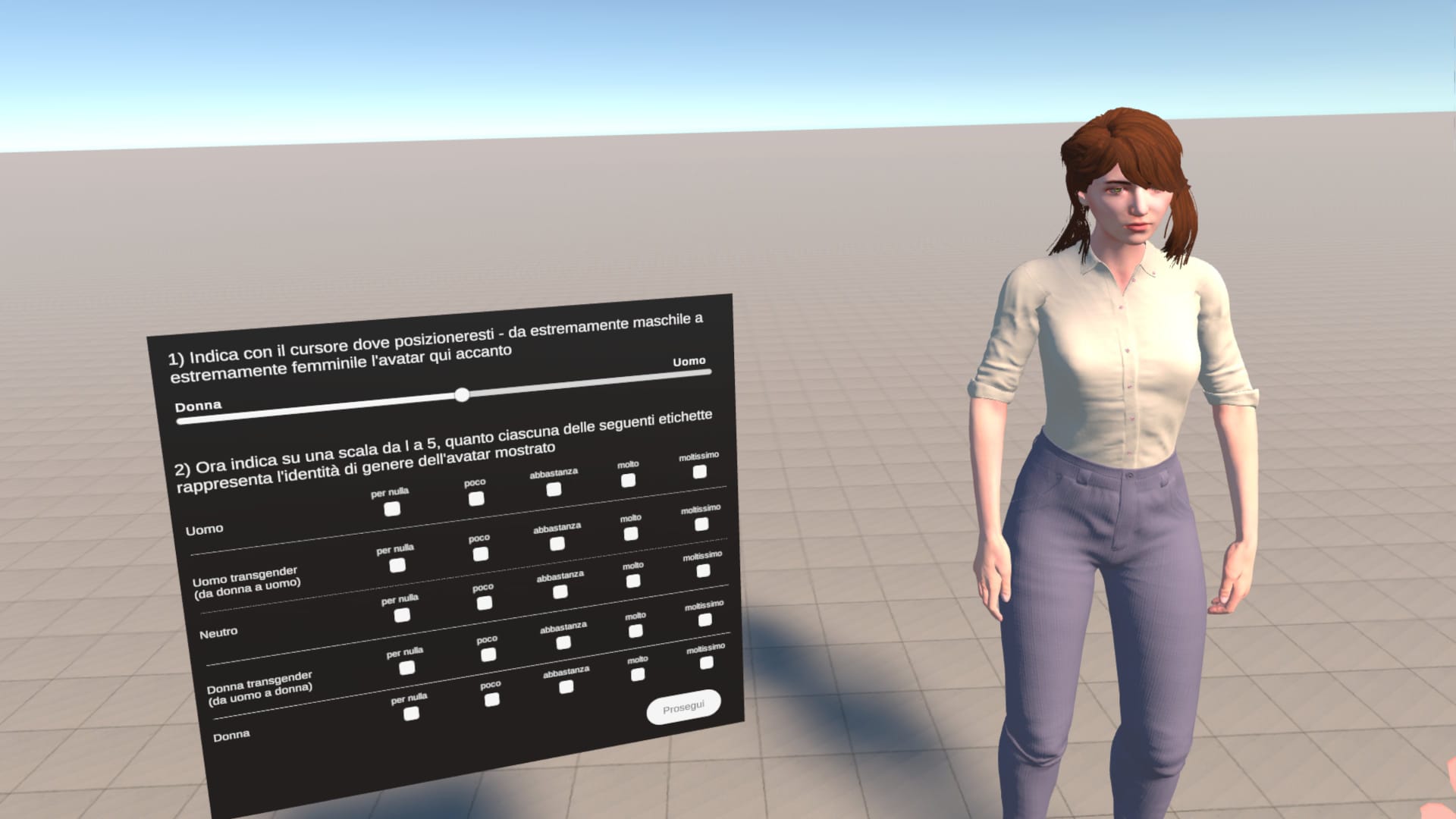
This virtual reality environment was developed to investigate how people categorize virtual avatars in terms of gender identity based on their external appearance and visual features. The paradigm presents participants with a set of 10 different avatars, each characterized by distinct combinations of outward features, allowing researchers to examine how variations in avatar appearance influence gender-related judgments and categorization processes.

The task follows a within-subject design in which each participant is exposed to all 10 avatars across repeated trials. After viewing each avatar, participants provide their evaluations directly inside the virtual environment using Likert-type response scales. This interaction system was specifically designed to avoid removing the headset or interrupting the experimental experience, thereby helping to preserve immersion and sense of presence throughout the entire task.

The avatars were created using MetaPerson, while participant interaction with the virtual interface is supported through Meta hand-tracking libraries. Responses can therefore be entered naturally within VR without relying on traditional external input devices.

The system also includes an integrated data-management procedure. At the beginning of the session, a unique participant ID can be entered and associated with all subsequent responses. Information about the experimental session and the in-VR questionnaire is automatically saved as a CSV file directly on the device storage. This makes it possible to match VR-generated data with responses collected through external survey platforms, such as Qualtrics, by using the same unique participant identifier.

The environment is currently available in Italian and is designed as a fully guided experimental experience, with participants led through the procedure without requiring intervention from the researcher during the task.

The paradigm is currently being used as a research tool within an ongoing study on gender-related social categorization in immersive virtual environments. It should therefore be considered an active research prototype whose structure, stimuli, and validation are still being refined as data collection progresses.

virtual reality environment for testing social categorization in VR social psychology

VR Human Avatar Social Categorization Task

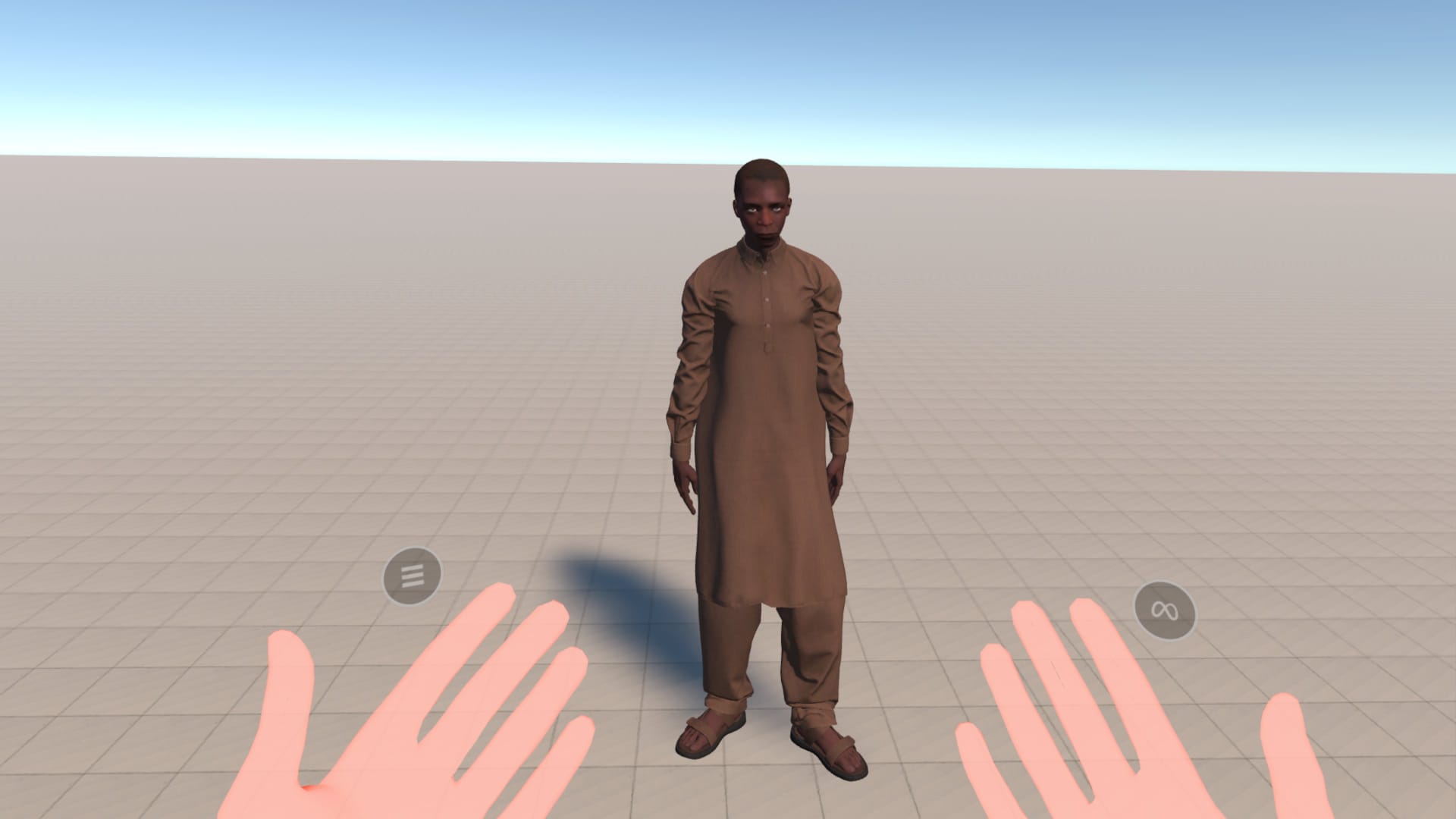
This virtual reality environment was developed to investigate how people socially categorize human-like avatars on the basis of their visual appearance. The paradigm presents participants with a series of virtual characters that differ in their outward features, allowing researchers to examine how social judgments and categorization processes emerge when individuals encounter embodied digital agents in an immersive environment.

The task follows a within-subject design, with each participant evaluating multiple avatars across repeated trials. After viewing each avatar, participants provide their judgments directly inside virtual reality using Likert-type response scales, allowing the entire experimental procedure to be completed without removing the headset or interrupting the immersive experience. This makes it possible to collect repeated social evaluations while preserving continuity, immersion, and sense of presence throughout the task.

As in our other VR assessment paradigms, the environment supports in-VR interaction through Meta hand-tracking libraries, enabling participants to navigate the procedure and enter their responses naturally without relying on external input devices.

The system also includes integrated participant and session management. A unique participant ID can be entered at the beginning of the experiment and automatically associated with all subsequent responses. Experimental and questionnaire data are saved directly as a CSV file on the device storage, allowing researchers to match the responses collected in VR with data obtained through external survey platforms such as Qualtrics or comparable systems.

The paradigm is available in two separate builds, one featuring male avatars and one featuring female avatars. This modular structure allows researchers to select the appropriate stimulus set according to the specific aims and design of the study.

The environment is fully guided and designed to minimize the need for researcher intervention during the experimental session. It was developed as a research tool for the systematic study of social categorization processes in immersive virtual environments.

The study for which this paradigm was developed is currently at the minor revision stage, and the corresponding empirical results are expected to become available soon. The downloadable builds should therefore be considered research versions of an actively used experimental paradigm.